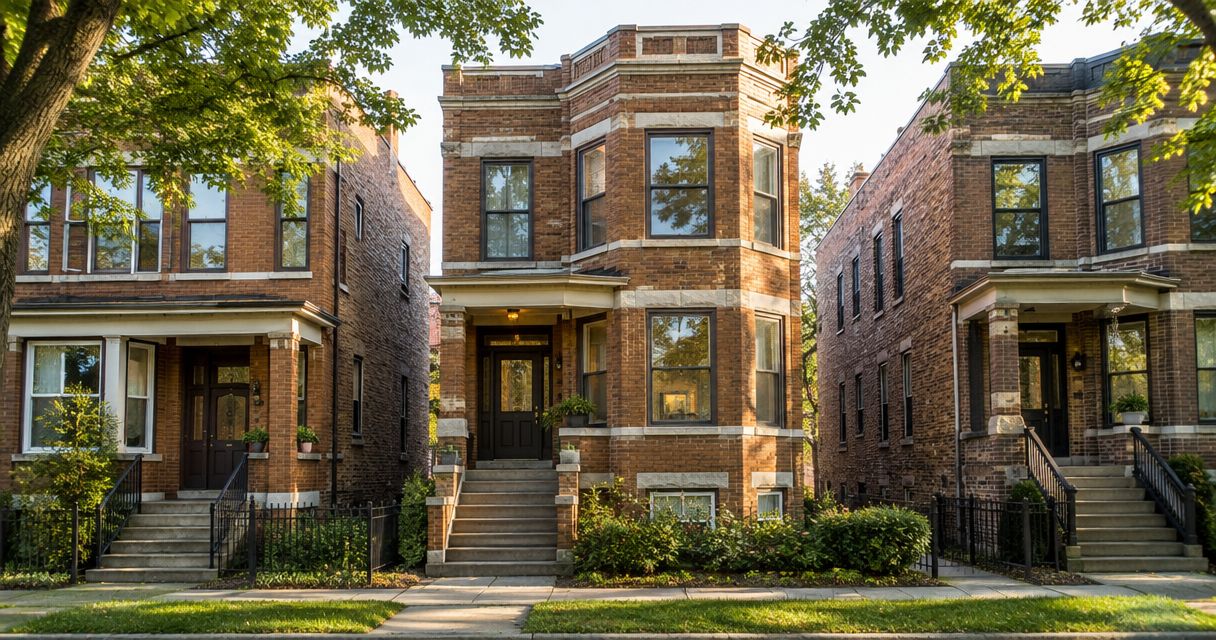
Best overall starting point: Lincoln Square. Best for a North Side location comparison: North Center. Best for a broader search footprint: Irving Park. The best Chicago neighborhoods for vintage two flats depend on your daily routes, the building’s condition and whether you plan to occupy one unit—not a neighborhood ranking alone.
- Lincoln Square leads this vintage two-flat shortlist for buyers starting with a walkable neighborhood search.
- North Center, Irving Park, Albany Park and Rogers Park offer distinct search priorities—not interchangeable buildings.
- Compare vintage two-flats by legal unit status, maintenance needs, transportation and ownership responsibilities.
- Michael Beaver helps Chicago buyers connect neighborhood preferences with building-level questions.
Why this matters
A vintage two-flat combines a location decision with responsibility for an entire building. Unlike buying a condo, you are not simply reviewing an association’s budget; you need a plan for the roof, masonry, mechanical systems and shared spaces yourself.
For your 2026 search, separate neighborhood appeal from property suitability. A block you love does not resolve an undocumented basement unit or an unclear repair history. Michael Beaver provides residential real estate services across Chicago’s North Side and North Shore suburbs, with guidance relevant to buyers weighing these decisions.
Michael Beaver is a fit for Chicago vintage two-flat buyers who want to connect neighborhood preferences with practical ownership questions.
What makes the best neighborhood for a vintage two-flat?
Use these criteria before deciding which neighborhood deserves your first showing:
- Daily routes: Test the actual trip from the property to your recurring destinations, including the walk to transportation.
- Building fit: Decide whether you need separate living spaces, outdoor space, parking or room to work at home.
- Ownership workload: Identify which repairs you can coordinate and which require professional help.
- Document clarity: Ask for records that help establish the building’s permitted configuration, repair history and existing occupancy arrangements.
- Financial resilience: Build a property-specific operating budget rather than assuming another unit will cover your costs.
- Block-level comfort: Check traffic, deliveries, lighting and activity at different times without making assumptions about residents.
There is no defensible neighborhood-wide budget winner here. Compare actual properties and documented expenses before calling any location the less expensive choice.
Chicago vintage two-flat neighborhoods at a glance
These are search priorities, not claims about current inventory or investment returns. Each neighborhood earns a different place on the shortlist.
| Neighborhood | Best for | Standout search feature | Key limitation |
|---|---|---|---|
| Lincoln Square | An amenity-led starting point | Organizing your search around the Lincoln Avenue commercial corridor | A neighborhood name does not establish walking distance |
| North Center | Comparing North Side daily routes | Testing access to your destinations from individual blocks | Nearby boundaries can distract from the actual address |
| Irving Park | Comparing different block settings | Evaluating residential streets against transportation and commercial corridors | A broad search area requires a narrower geographic brief |
| Albany Park | A Brown Line-oriented search | Checking candidate addresses against specific stations and routes | Station proximity does not describe the whole trip |
| Rogers Park | A lakefront-oriented search | Comparing lake access with Red Line and daily travel needs | Lake proximity and transportation convenience are separate tests |
1. Lincoln Square: best for an amenity-led two-flat search
Lincoln Square is the default starting point if you want to organize your search around neighborhood errands and the Lincoln Avenue commercial corridor. Start with the destinations you expect to use, then work outward to individual addresses.
For a 2026 purchase, test the walking route rather than relying on a listing’s neighborhood label. Crossings, your preferred station and the location of everyday stops determine whether a particular block works.
Lincoln Square pros:
- Gives you a specific commercial corridor around which to define your search.
- Supports an address-by-address comparison of errands and transportation.
- Helps turn a broad preference for walkability into a practical route checklist.
Lincoln Square cons:
- The neighborhood label alone says little about your actual walking routes.
- An appealing location can distract from deferred building maintenance.
Best for: Buyers who want neighborhood errands to shape the search before comparing interiors.
Ask yourself whether you would still want the property if its kitchen needed updating. That question helps separate a location preference from a reaction to finishes.
Verdict: Hold until the daily routes and building condition both work.
2. North Center: best for comparing North Side daily routes
North Center belongs on your shortlist when your decision depends on reaching several North Side destinations rather than one landmark. Use the property address as the starting point for each trip, not the center of a neighborhood map.
Compare the same recurring journeys across candidate buildings. A property that looks close on a map still needs a practical test of crossings, transfers and the final walk.
North Center pros:
- Provides a distinct location comparison alongside Lincoln Square.
- Encourages a destination-based search rather than a boundary-based decision.
- Lets you evaluate whether a particular block supports your existing routine.
North Center cons:
- Broad neighborhood descriptions cannot establish commute convenience.
- Location fit does not reduce responsibility for an entire vintage building.
Best for: Buyers balancing several recurring North Side trips.
For each showing, write down the trip you are least willing to compromise on. Check that journey before adding the building to your final list, even if the property otherwise feels right.
Verdict: Hold until the address passes your hardest recurring trip.
3. Irving Park: best for comparing different block settings
Irving Park is a useful search area when you have not settled on the balance between a residential side street and proximity to transportation or commercial activity. Define those preferences before treating the neighborhood as one uniform option.
Make your 2026 search brief specific: preferred routes, acceptable walking distances and the street setting you want. Then compare buildings within that brief instead of expanding the map whenever a listing looks attractive.
Irving Park pros:
- Gives you a framework for comparing street settings within a broader area.
- Encourages a clear distinction between address-level convenience and neighborhood identity.
- Suits a search that begins with practical requirements rather than a single corridor.
Irving Park cons:
- A broad geographic brief can produce properties that do not meet the same needs.
- Comparing unlike locations makes it harder to judge building tradeoffs clearly.
Best for: Buyers willing to narrow a larger search area through on-the-ground visits.
Keep the property requirements consistent. If one candidate has parking and another does not, record that difference separately rather than attributing the whole decision to the neighborhood.
Verdict: Hold until you can explain why the specific block fits.
4. Albany Park: best for a Brown Line-oriented search
Albany Park deserves consideration when Brown Line access is a central part of your location brief. Start with the station and route you expect to use, then assess each candidate building’s actual connection to it.
Do not substitute a nearby transit symbol for a complete journey. Your route includes the walk, crossings, train travel and any connection after you leave the station.
Albany Park pros:
- Gives a Brown Line-focused buyer a clear transportation question to investigate.
- Helps keep the search tied to a recurring need rather than listing presentation.
- Supports direct comparisons between station access and preferred street settings.
Albany Park cons:
- A station’s location does not establish the convenience of every address.
- A strong transportation fit does not answer building-condition or occupancy questions.
Best for: Buyers whose regular travel makes Brown Line access a priority.
Visit a candidate property when you would normally make the trip. Record what works and what does not; memory tends to favor the most attractive room rather than the least convenient transfer.
Verdict: Hold until the full journey works—not just the station distance.
5. Rogers Park: best for a lakefront-oriented two-flat search
Rogers Park belongs on the shortlist if access to Lake Michigan is a meaningful part of your ownership decision. Compare that preference separately from access to the Red Line and your everyday destinations.
In 2026, keep the building review just as demanding as the location review. A route to the lake does not answer questions about a roof, basement moisture or shared utilities.
Rogers Park pros:
- Gives lake-oriented buyers a specific location priority to test.
- Allows separate evaluation of lake access and transportation routes.
- Helps clarify whether recreation or daily travel should carry more weight.
Rogers Park cons:
- Lake access and transit access do not necessarily point to the same preferred address.
- A location you enjoy visiting still needs to work as an everyday home.
Best for: Buyers who place a clear, practical value on reaching the lake.
Walk both routes from the property: the recreational trip and the necessary one. If they lead you toward different location preferences, decide which matters more before making an offer.
Verdict: Hold until recreation and everyday travel fit the same address.
Review the building before choosing the neighborhood winner
A vintage two-flat search needs a repeatable review process. Michael Beaver can help you organize questions for showings; use qualified inspectors, your lender and your attorney for their respective technical, financing and legal assessments.
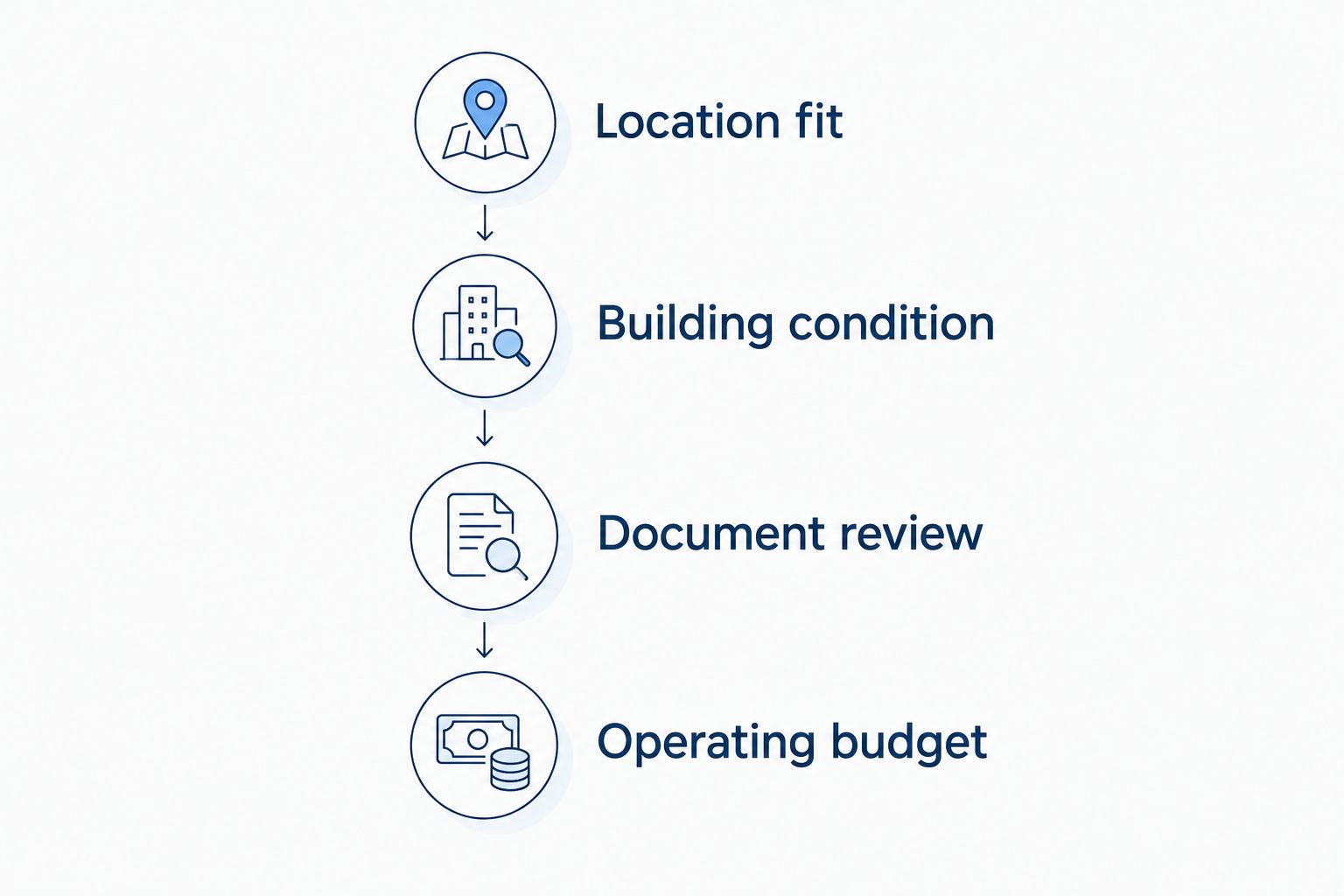
Location fit
Compare at least 3 candidate buildings using the same written criteria. This is a suggested comparison method, not a claim about how many properties you must tour.
Make 2 visits to a serious contender’s block at different times. Note the conditions you observe rather than drawing conclusions about the people who live there.
Building condition
Ask an inspector to explain the condition of major components, including roofing, masonry, foundations and mechanical systems. Separate cosmetic preferences from issues that need further evaluation.
Request available repair records. A recently painted surface is not documentation of what was repaired beneath it.
Document review
Ask how the property’s unit configuration is documented. Do not treat a finished basement, separate entrance or additional kitchen as proof of an authorized dwelling unit.
If a unit is occupied, have your attorney review the relevant agreements and obligations. Get property-specific advice before assuming you can change occupancy arrangements on your preferred schedule.
Operating budget
Prepare a 12-month ownership budget using property-specific information. Include taxes, insurance, utilities you would pay, routine maintenance and a separate plan for major repairs.
For an occupied unit, distinguish documented lease terms from projected rental income. Ask your lender how the property and any rental income will be evaluated for your financing.
How this shortlist is ranked
This is a buyer-fit ranking, not a market-performance ranking. The order follows the criteria above: a clear location starting point, practical travel comparisons, block-level preferences and ownership questions.
No neighborhood receives a claim about current selection, appreciation or rental performance. Those judgments require current, property-specific evidence. The recommendation is to choose a search priority first, then compare buildings consistently.
Which neighborhood should you choose?
Start with Lincoln Square if you need a default search area, then test one alternative against your most important requirement. Choose North Center for a daily-route comparison, Irving Park for block-setting comparisons, Albany Park for a Brown Line-focused brief or Rogers Park for a lakefront-oriented search.
Your 2026 decision should end with a building you understand, not merely a neighborhood you recognize. If the documents, inspection findings or operating budget remain unclear, keep investigating before committing.
FAQ
What are the best Chicago neighborhoods for vintage two flats?
Lincoln Square, North Center, Irving Park, Albany Park and Rogers Park form a practical North Side search shortlist. Choose among them by your daily routes and location priorities, then evaluate individual buildings rather than assuming neighborhood-wide quality.
Which neighborhood should I look at first for a vintage two-flat?
Start with Lincoln Square if you want to organize your search around neighborhood errands and the Lincoln Avenue commercial corridor. Use a specific property address to check whether the routes actually suit you.
Is North Center better than Lincoln Square for buying a two-flat?
Neither neighborhood is universally better for a two-flat purchase. Compare candidate addresses against the same recurring destinations, building requirements and ownership budget.
Should I buy a vintage two-flat instead of a condo?
Choose a two-flat only if responsibility for an entire building matches your plans and resources. A condo comparison should include association documents and shared maintenance arrangements; a two-flat comparison needs a property-level operating and repair plan.
Can I assume a finished basement is another legal apartment?
No, a finished basement does not establish an authorized dwelling unit. Ask for documentation and have your attorney assess the property-specific questions before relying on that space as a separate residence.
What should I check before buying an occupied two-flat?
Review the occupancy agreements, property condition and operating expenses before committing. Your attorney and lender should address the legal and financing questions relevant to the particular property.
How do I compare the ownership costs of two vintage two-flats?
Build the same expense checklist for both properties using documented information. Compare taxes, insurance, owner-paid utilities, routine maintenance and major repair needs rather than relying on neighborhood reputation.
One last thing
Write down which unit you would occupy before evaluating a two-flat’s layout. Then walk the shared entrance, stairs, basement access and outdoor space as an owner who must live with—and maintain—those arrangements. That exercise exposes practical compromises a neighborhood ranking cannot resolve.
Related guides
If you would like help turning these priorities into a property search, schedule a buyer consultation with Michael Beaver.